
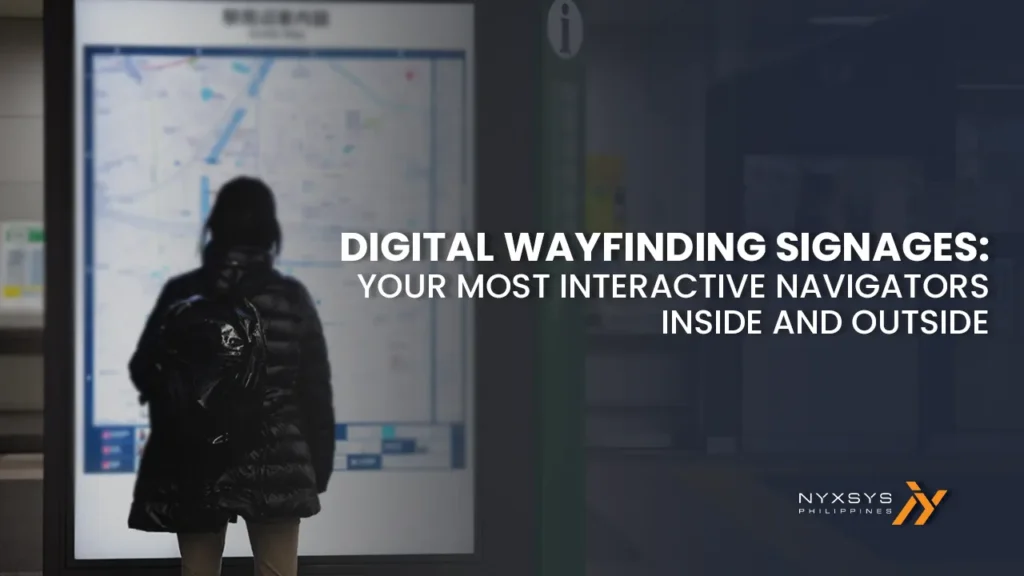
We’ve all been in a situation where you’re trying to find the correct gate before boarding begins because you’re rushing to catch a flight. You’re in rush to find where your peers are but don’t know where you’re supposed to meet up.
Or you may be hungry in a large mall and searching for that one restaurant that you swear was “just here last time.” Alternatively, you may be visiting a campus or office for the first time and are making circles while feigning not to be lost.
A digital wayfinding signage is in place to prevent situations like these.
They are designed to help people navigate areas so they can move confidently instead of feeling lost. For years, traditional static signs have been capable of doing this, but their capabilities are limited. When you’re pressed for time, printed maps can be difficult to read, out-of-date, or just too much.
That experience is altered by digital wayfinding signs. Digital wayfinders engage with users, react quickly, and give precise, step-by-step instructions rather than requiring them to pause and read a map. They are intelligent, instantaneous, and interactive, acting more like a useful guide than a sign.
Digital wayfinding signs are rapidly emerging as the best indoor and outdoor navigators in today’s hectic environments.
Why a Digital Wayfinding Signage is Considered the ‘Best Navigator’
Physical directional signage is designed to answer one basic question: “Where do I go next?” They keep people moving in the right direction and reduce confusion, thereby managing congestion in very busy areas.
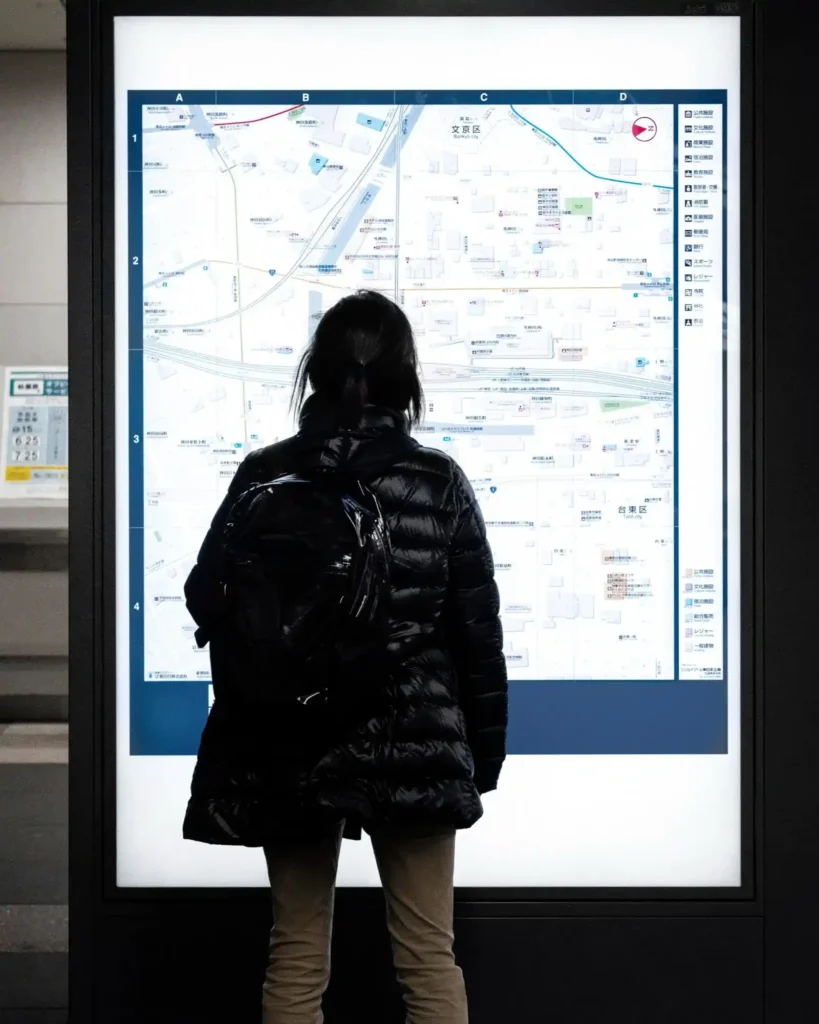
What is a wayfinding signage?
When was the last time you looked at a printed directory? You leaned in, looked at small labels, tried to recall your location, and then hoped that you had chosen the correct hallway. You doubled back and tried again if you were mistaken. It’s not particularly enjoyable, but it works.
Digital wayfinding signage is intended to bridge this gap.
Instead of making people navigate areas on their own, digital wayfinding uses software and digital screens.
Instead of looking at a static map, users can interact with a screen, search for their destination, and see the best route from where they are right now. It eliminates all uncertainty and is straightforward and unambiguous.
Its best feature? Everything is updated in real time. The directions also change if a store relocates, an event switches venues, or an area is temporarily closed. There isn’t any confusion brought on by out-of-date maps or signs.
Wayfinding systems that rely on screens are designed to be intuitive. Similar to using your phone’s navigation, you tap, search, and follow straightforward, step-by-step instructions. Digital wayfinding simply makes navigating spaces simpler, quicker, and much less annoying, whether it’s through interactive screens guiding people indoors or outdoor directory signs welcoming them at an entrance.
3 Reasons Why You Should Invest in Digital Wayfinding Signages

1. Real-Time Guidance That Helps People Move with Confidence
Traditional indoor directional signs are usually the first option in busy locations such as shopping malls, hospitals, universities, and office buildings. However, if you’re opting for clear navigation, digital wayfinding signages would work better. Here’s why.
Most of the time, traditional indoor directional signs leave people guessing which way to go. These signs point in a bigger, general direction that oftentimes don’t always help the visitors to get there easily.
But with a digital wayfinding signage, visitors are offered turn-by-turn directions in real time, eliminating the need to stop several times to confirm directions or commit maps to memory.
Moreover, the system automatically modifies the route if a floor is undergoing maintenance, a hallway is closed, or an entry point is temporarily restricted. Users are always guided by precise, current information whether it is used as exterior directory signs in public areas or as interior directional signage inside buildings.
This degree of guidance greatly enhances visitor flow and lessens congestion in high-traffic areas, which are typical in Metro Manila and other major Philippine cities.
2. Easy Updates Without the Cost and Downtime
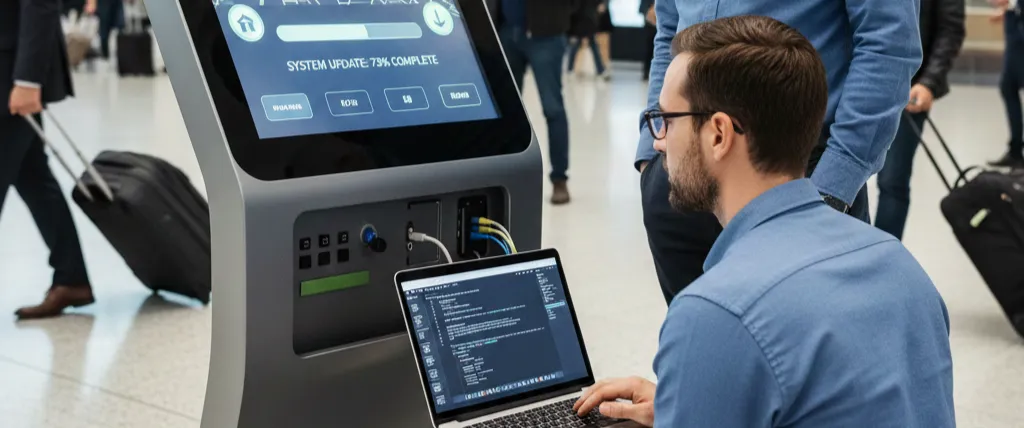
Minor updates to static signage frequently necessitates reprinting maps or replacing signs, which is an expensive and time-consuming process.
Digital signage management is quick and easy with this type of screen. Software allows for instantaneous application of changes across all screens. It is not necessary to print new materials or remove physical signs.
As layouts change, this ensures that interior directional signage and indoor directional signs remain accurate at all times. Facilities avoid visual clutter from out-of-date information and remain tidy, professional, and user-friendly.
Meaning, this can lower the long-term costs and lessen the operational disruption, making it now an important advantage in this fast-moving commercial place for property and business managers here in our country.
3. Built for Large, High-Traffic Philippine Spaces
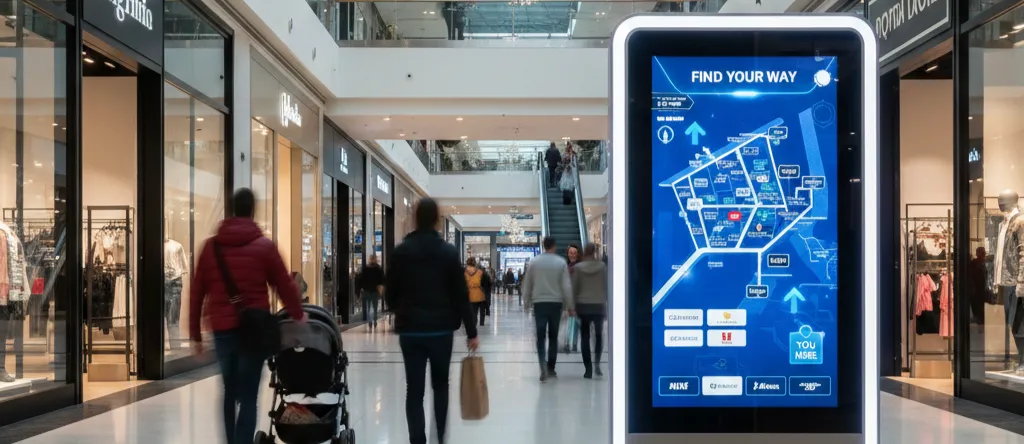
Large locations that are frequently found throughout the nation, such as shopping centers, hospitals, corporate campuses, universities, and government buildings, are perfect for digital wayfinding signage.
Digital wayfinding provides a consistent navigation experience from entrance to destination because it adjusts to the size and layout of the area. This improves the accessibility, organization, and friendliness of large facilities for both tourists and Filipino visitors.
This is now becoming an important thing around the world. They are no longer seen just to give more convenience but it is becoming a standard for modernizing spaces. Improving experiences for the visitors, while reducing confusion, and helping in facilitation operation more efficiently.
The Function of a Wayfinding Signage Beyond Giving Simple Directions
Digital wayfinding signs are much more than just navigational aids. In many places, they subtly influence how guests feel as soon as they enter, whether they are at ease, self-assured, or totally disoriented.
Customization is one of the most obvious advantages. Digital navigation signs can be made to blend in with the style of the area they are in. Simple layouts and soothing colors may be used in public libraries. A high-end hotel might favor slick graphics and tasteful transitions. Cleanliness and minimalism are common in modern corporate offices. Instead of standing out like an afterthought, the signage blends in with the surroundings when the design feels familiar and deliberate.
Such systems are also used for purposes other than directional aids. Digital direction aids can display a list of tenants, events, organizational staff members, or availability of rooms all at once. Visitors wouldn’t have to scour through several display systems to get their needed information because all they need will be available to them at once.
In reality, digital wayfinding is a solution for everyday problems.
Digital wayfinding enhances pedestrian traffic flow. In other words, it prevents congestion and bottle-necking effects of pedestrian traffic. Moreover, digital wayfinding allows people to spend less time meandering and spend more time reaching their desired locations.
Many digital wayfinding systems also provide valuable information, for example, what destinations are being searched for the most. While these details seem trivial, they allow facility managers to make more informed decisions in the future by understanding how their space has, in fact, been used.
After all, digital wayfinding is more than just directions. Digital wayfinding is about making spaces that are easier to navigate, more inviting, and better for humans.
Move Forward with a Trusted Digital Signage Provider
Upgrade of signage screens is among the elements of transitioning towards digital navigational signage, and then there’s optimization for user experience. Digital navigation systems have become an integral part of modern infrastructure because it makes operations smoother and easier, and it also provides a welcoming ambiance and reduces friction.
In case you are looking to upgrade your outside directory signs, inside directory signs, or inside directional signs, Nyxsys Philippines is here to help. Contact us and together we can create a navigation system truly suited to your area.
Upgrade your directory signs.
Contact us and create a navigation system truly suited to your area.