Why Your Billboard QR Code Failed: The Science of Scanning Distance 

Take a drive along EDSA during rush hour, Ortigas during peak hours, or BGC on a Friday evening, and you’ll notice the same call-to-action shining brightly from giant LED screens:  “Scan the QR code now.”  

 
In the Philippines, brands are pouring significant resources into QR code campaigns on digital out-of-home (DOOH) billboards to link offline presence with immediate online interaction. The concept is simple yet brilliant: convert traffic into website visits, app downloads, promo redemptions, or social media follows in an instant.  
 
However, many QR code billboard campaigns fall flat. Not because the design is unimpressive. Not because the incentive is unappealing. It’s because of misinterpreted scanning range, vehicle speed dynamics, and LED screen constraints.  
 
Now, let’s get scientific. 

The Mistakes That Undermine QR Billboard Campaigns 
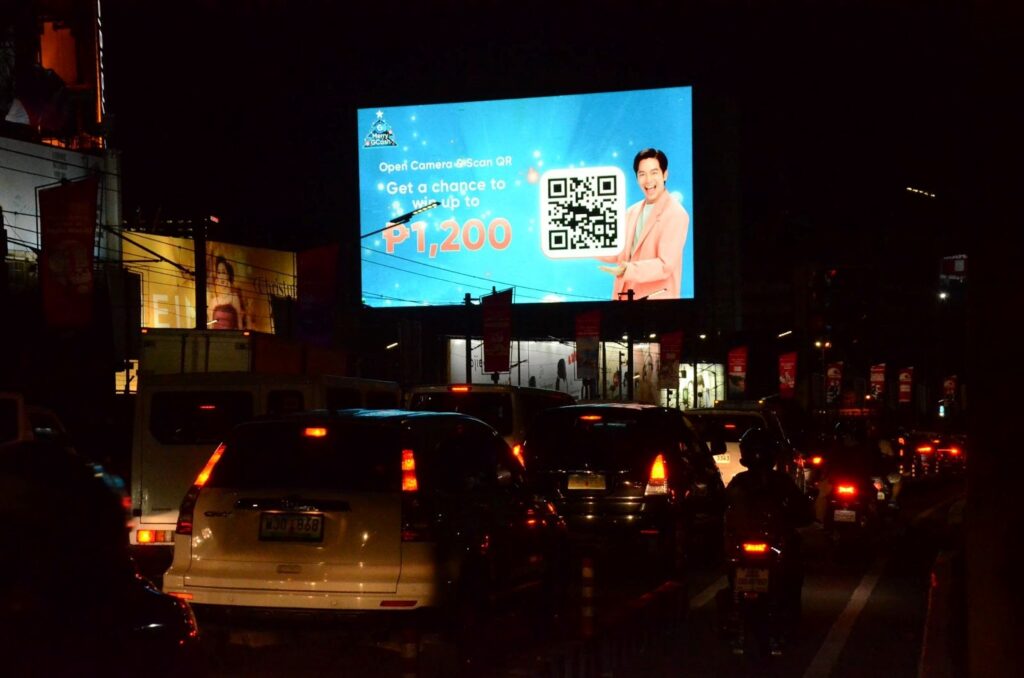
One of the biggest mistakes brands make is to consider billboard QR codes in the same way they consider print or social media ads. A QR code on a flyer is scanned at arm’s length. A QR code on a billboard is scanned several meters away—often from a moving car.  
 
Another mistake is to assume that simply making the QR code “large” will ensure success. Size is only effective in relation to scanning distance. A large QR code placed too far from traffic lanes will still be impossible to scan.  
Vehicle speed is also often overlooked. In free-flow traffic at 40-60 kph, passengers will have only one to two seconds to notice, focus, and attempt a scan—usually not enough time to succeed.  
 
Finally, the technical specifications of LEDs are more important than most brands understand. Low pixel density (large pixel pitch) can cause the QR modules to blur together, while low contrast ratios—especially in direct sunlight—can make it impossible for smartphone cameras to detect the pattern. 

The Physics Behind QR Code Scanning

QR codes are limited by optics and camera resolution. Each QR code has an optimal scanning distance based on its size and the size of its smallest data module. 
 
The industry standard for QR code scanning distance is the 10:1 rule: 

Maximum scanning distance ≈ QR code width × 10

This means: 
    • A 0.5 meter (50 cm) QR code can be scanned from up to 5 meters away.
    • A 1 meter QR code can be scanned from up to 10 meters away.
    • A 1.5 meter QR code can be scanned from up to 15 meters away. 
But only in ideal conditions: a fixed viewer, high contrast, bright lighting, and a high-quality smartphone camera.  
 
In a roadside setting with moving traffic, glare, and limited focus time, the effective scanning distance will be 20-40% less. 
 
So in practice: 
    • A 1 meter QR code placed 10 meters from the traffic lane will only be scannable from 6-8 meters away in a real-world driving scenario. 
If your billboard is 20 meters from the nearest vehicle lane, a 1 meter QR code will not perform. Physics simply won’t allow it

Why LED Pixel Density Matters 

Even if your sizing complies with the 10:1 ratio, the LED display has to display the QR code in a manner that is legible enough for a smartphone camera to read each data module.  
 
For low-resolution LED displays with a large pixel pitch (such as P10 or larger), small QR data modules may combine. When this happens, the loss of definition makes it difficult for cameras to scan the modules, particularly from a distance.  
 
For higher-resolution LED displays with a smaller pixel pitch, the definition of edges is maintained, and modules are distinguishable. This is particularly important when the QR code is larger than a meter and is meant to be scanned from 8 to 15 meters away.  
 
Brightness and contrast are also essential. The QR code has to be visible enough in bright sunlight to provide a high level of black and white contrast. If not, the success rate of scanning will be lower. 

The Role of Vehicle Speed and Dwell Time

Scanning is not instantaneous. A typical user needs about 3 to 5 seconds to:

1
Notice the QR Code
2
Unlock or open their camera
3
Aim steadily
4
Wait for the code to redirect

At 20 kph, a car moves approximately 5.5 meters per second. In five seconds, it’s almost 28 meters of movement. 

At 40 kph, this distance doubles to over 55 meters in five seconds—making stable scanning extremely difficult. 

This is why QR billboard campaigns are most viable in areas with frequent congestion, stoplights, intersections, or slow-moving traffic below 20 kph. Without sufficient dwell time, even perfectly sized QR codes fail. 

Data-Driven QR Campaign Deployment 

Instead of showing QR creatives throughout the day, effective DOOH campaigns synchronize QR visibility with traffic conditions.  

As speeds fall below 20 kph, dwell times escalate. This makes scanning windows realistic. During free-flow conditions, QR creatives can be swapped with brand awareness messages that don’t require immediate engagement.  

This method turns QR campaigns from static placements into dynamic, condition-based executions. 

How Nyxsys Philippines Engineers QR Code Success 
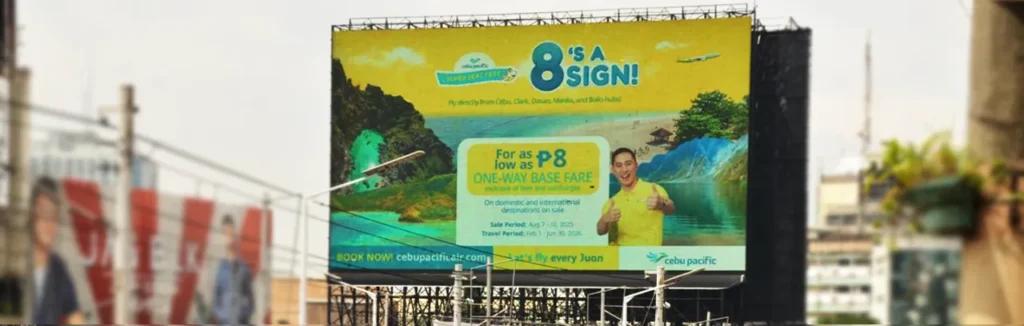
Nyxsys Philippines treats QR billboard projects as a technical and data-driven process, not just an artistic endeavor. 
An ad promoting a P8 One-Way Base Fare seat sale with the tagline "8'S A SIGN!" featuring a man giving a thumbs-up against a tropical background.

Strategic Billboard Placement 

Nyxsys LED billboards are placed at functional scanning ranges, usually between 10 to 25 meters away from traffic lanes, depending on the size of the billboard format. Larger format billboards enable the QR code to be expanded to 1.5 meters or larger when necessary.  
 
Sites are chosen based on traffic flow, focusing on areas where traffic slows down, where there are intersections, and where dwell times are longer. 
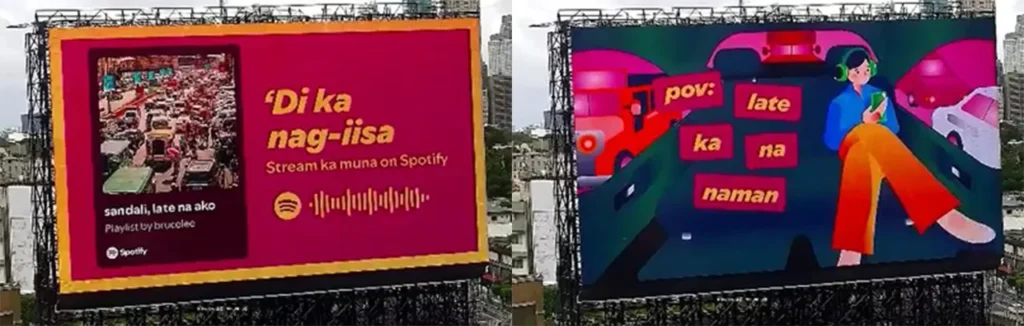
Spotify Digital Out-of-Home (DOOH) billboard ad in traffic.

High-Resolution LED Screens Optimized for Clarity 
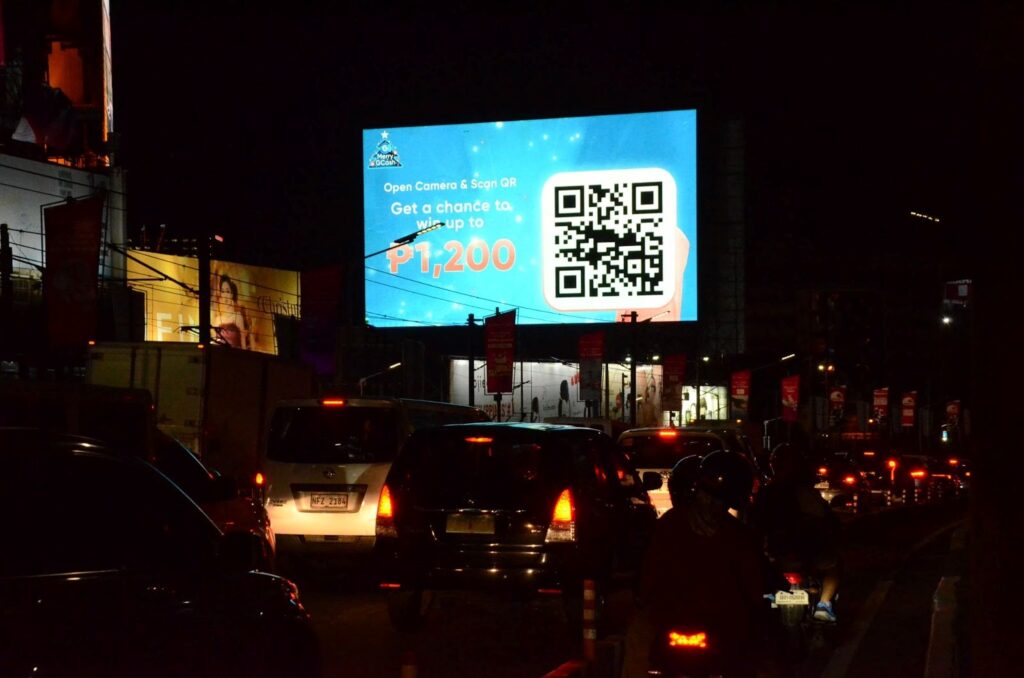
Nyxsys uses LED screens with optimized pixel pitch to ensure the integrity of the QR module at a distance. High brightness and high contrast ratios ensure that the QR code can be scanned in both daylight and nighttime environments, thereby reducing the failure of scanning due to glare or washout

Intelligent Scheduling with VcastPlay 
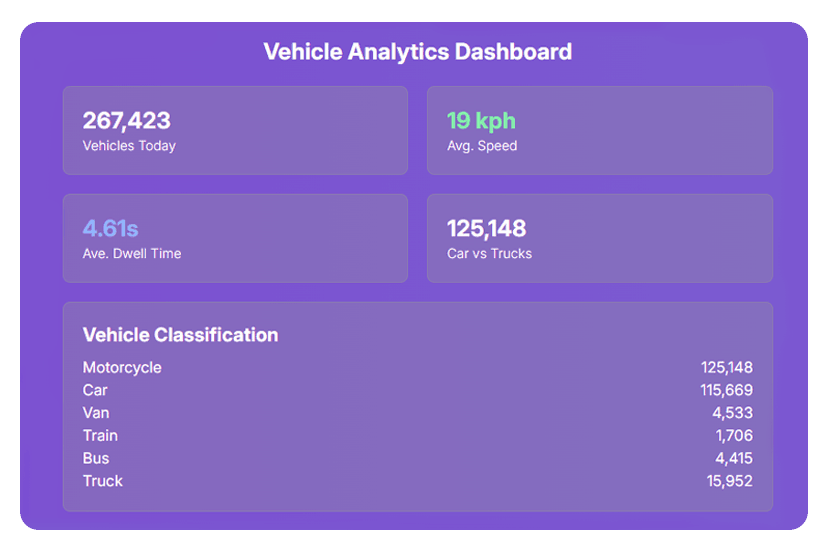
Using vcastplay, the campaigns can be dynamically planned. The QR creatives can run only during the high-congestion periods and then switch to non-QR messaging during the fast-moving traffic periods. 
A digital dashboard titled "Vehicle Analytics Dashboard" displayed on a purple background. The dashboard features several data tiles with white text. A separate section titled "Vehicle Classification" lists the breakdown of vehicles counted.
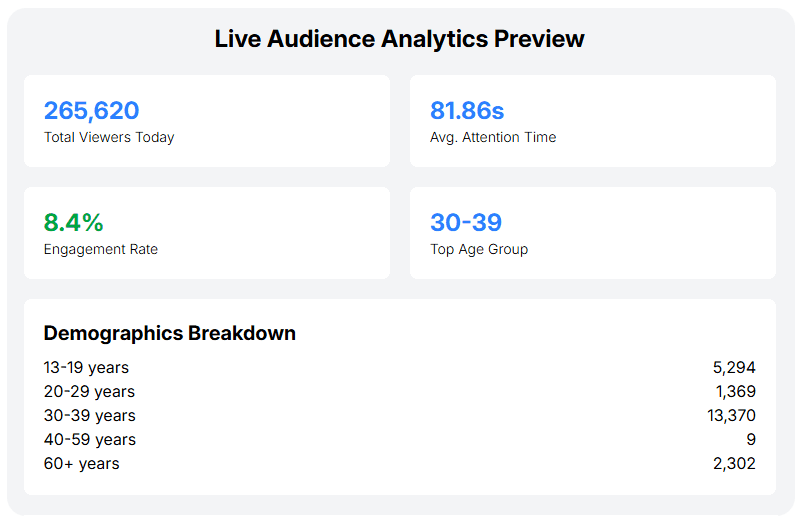
A digital dashboard titled "Live Audience Analytics Preview" displayed on a white background with a dark border. The dashboard features several data tiles. A section titled "Demographics Breakdown" lists the viewer count by age group.

Real-Time Traffic Intelligence via Calton DATx 

Calton DATx offers real-time car speed and congestion analysis. By detecting times when traffic is below 20 kph, brands can synchronize QR code display with actual scanning opportunity.  
 
This enables advertisers to differentiate between total impressions and actual scannable impressions, which is a crucial factor in assessing ROI. 

Conclusion 

QR billboard campaigns will not fail due to any inherent issues with QR technology. They will fail if brands fail to work within measurable parameters: the 10:1 distance rule, the impact of motion, pixel density, and the absolute importance of dwell time.  
 
When scanning distance, LED resolution, speed, and intelligent scheduling are optimized, QR codes on billboards can deliver exactly as planned—to connect physical traffic to digital action.  
 
Nyxsys Philippines offers the complete solution for this success: carefully placed LED inventory, high-resolution displays designed for optimal QR readability, intelligent campaign management via VcastPlay, and real-time traffic analytics via Calton DATx. 

Launch a QR Billboard Campaign That Actually Works

    • Explore Nyxsys’ LED billboard network.
    • Watch VcastPlay in action.
    • Review live traffic insights through CaltonDATx. 

Leave a Reply

Your email address will not be published. Required fields are marked *