
In the case of advertising in the Philippines, mall advertising is considered a large aspect in the way brand personalities reach Filipino consumers in the current age. In the Philippines, a mall is not just used for the purpose of shopping alone but also as a social hub, a food destination, and even a place where customers spend their free time hanging out, which in effect makes it one of the most powerful forms of indoor advertisements.
This is unlike other advertisements where a person will pass through and have no time to be reminded of an advertisement, but a mall advertisement will show up multiple times within a single visit. People take different paths through a mall multiple times within a single visit: through one entrance, past escalators, through food areas, and past parking lots, among others. All this exposure certainly helps brands create remembrance and boosts conversion rates considerably. Brands looking to advertise indoors have a very unique opportunity within shopping malls across the Philippines.
To this end, Nyxsys Philippines maintains a burgeoning portfolio of digital LED ads situated in high-traffic indoor locations such as shopping malls, commercial centers, and lifestyle hubs throughout the country. Through their LED Media Inventories, Nyxsys Philippines aims to give various brands access to strategically placed digital screens optimized for maximum visibility and effect. This prohibits various ads from going unnoticed, as they are strategically situated at prime locations within the mall where foot traffic is not a concern.
With the ability to leverage information held in Nyxsys’ digital media directories, advertising campaigns for malls can be executed much more precisely, identifying ad spaces that are most relevant for achieving goals and consumer targeting. This has allowed brands to go beyond individual ad spaces and develop comprehensive indoor advertising strategies that reach consumers throughout multiple points of their mall advertising and shopping experience.
What Is Mall Advertising?
Mall advertising is considered an indoor form of advertising, as it advertises products or brand messages in shopping malls or areas where people like to eat, hang out with their friends, and spend time for longer periods. The idea of advertising in such places is to reach the consumers during their ‘downtime.’ They are less rushed and more open to new experiences, especially during the time spent at shopping malls. The people who come to shopping malls spend more time than those in other public areas, and the impact of advertising in malls is far greater.
As opposed to billboard or ad transparency where the ad is exposed to consumers for a duration of just a few seconds, mall advertising has the added advantage of repetition as consumers are likely to pass the ad location several times within a single visit to the mall. This makes mall advertising a very effective form of indoor ad campaigning, particularly within the Philippines where mall culture has been deeply rooted in their lifestyle.
Main Categories of Mall Advertising
Mall advertising takes various forms, each of which performs a specific role in the overall indoor advertisement strategy. In the Philippines, different advertisement forms are being used to enhance impact.

Static displays
The most common form of advertisements in a shopping mall. Static indoor advertisements include wall panels, light boxes, and hanging banners placed along the passageways, near the entrances, and near the anchor tenants. Static indoor advertisements are most ideal when you want to ensure maximum visibility, particularly for the intended message to reach the consumer.
Digital Screen Ads
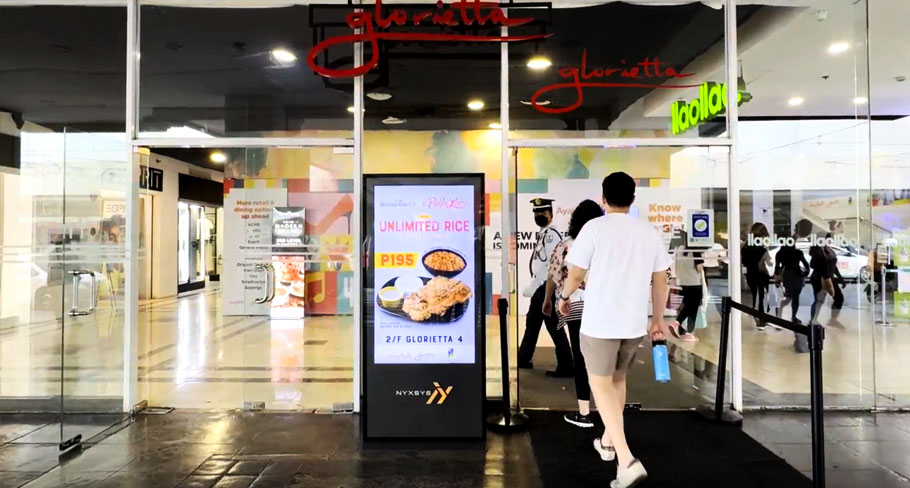
Digital advertising within mall environments offers an opportunity for brands to utilize movement and video to stand out within various and often visually overwhelming environments. Nyxsys specializes in offering solutions for LED signage within high-traffic indoor environments, including shopping centers and other premium spaces, for high-impact indoor advertising within the Philippines.

Experiential Activations
Experiential advertising in malls includes pop-up shops, interactive experiences, sampling, and branding takeovers that enable customers to engage with a product or service first-hand. Experiential advertising is ideal for brands that want to launch new products, run seasonal advertising campaigns, and build shareable experiences for customers.

Kiosks
Kiosks act as advertising and selling spaces that work on a semi-permanent basis inside shopping malls. They take different shapes, including product demonstrations, promotions, and lead generation. Given that these kiosks provide scope for physical interaction, they will serve as an added advantage to other indoor advertisements meant for awareness.
Elevator Wraps and Escalator Advertising
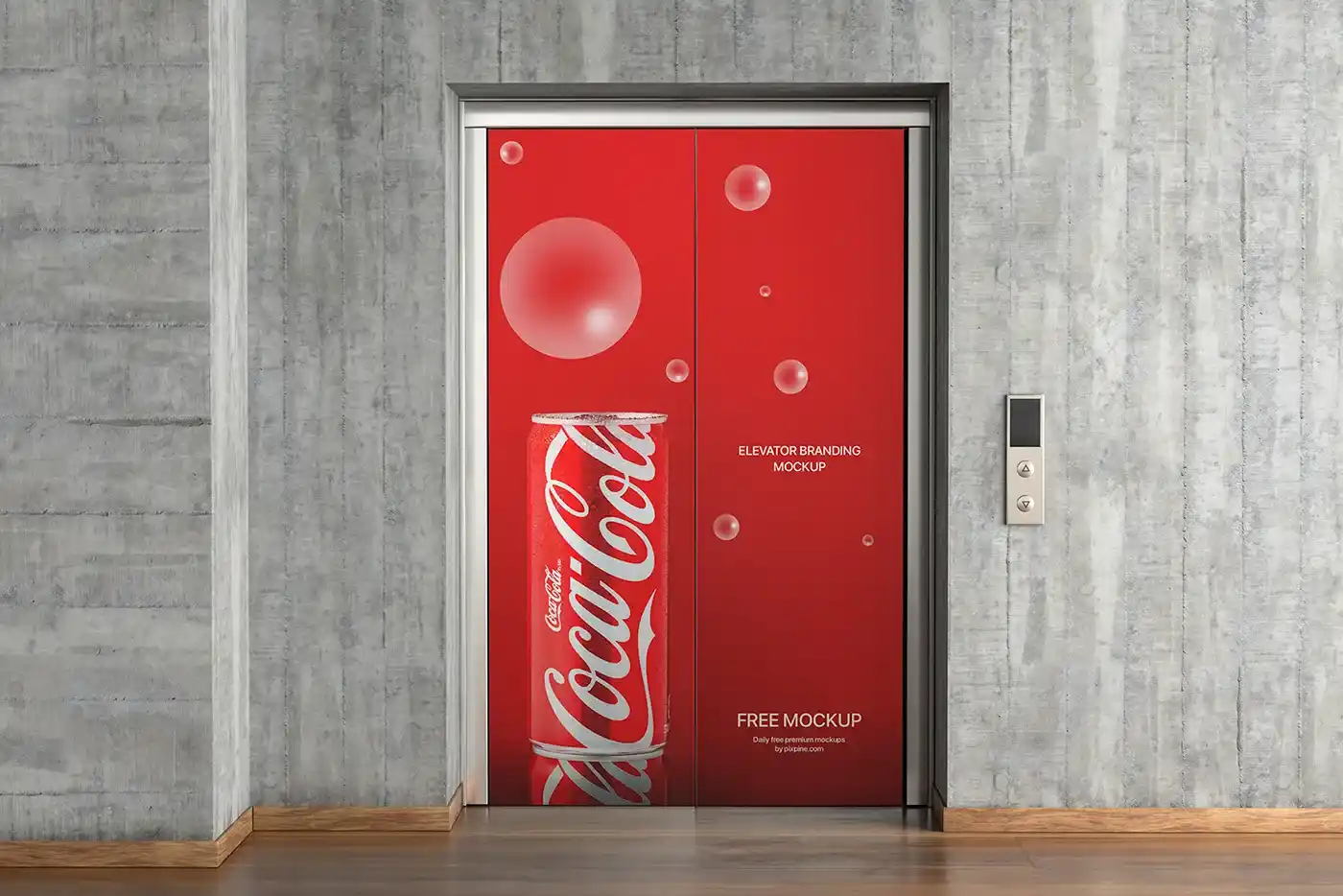
Elevator displays utilize the power of these “in-between” minutes where attention is naturally focused. The use of elevator doors as wraps, and the handrail of escalators for advertisements, places the brand message right in front of the line of sight of the consumer. This is a gentle yet effective medium, given the proximity to the viewer and the lack of competing visual stimuli.

Floor Graphics
The floor graphics will guide shoppers while reinforcing brand visibility. Many indoor advertisements are used for directional messaging, promotions, or queue-area branding. If combined with a wall or digital display, these floor graphics will help extend a campaign across multiple touchpoints within the mall.
By leveraging these different formats, mall advertising becomes a fully integrated indoor advertising ecosystem rather than a single placement. With Nyxsys’ network of digital signage assets across malls and other high-traffic indoor locations, brands can mount cohesive indoor advertising campaigns that will drive both visibility and measurable impact, making mall advertising the cornerstone of effective indoor advertising in the Philippines.
The Philippine Mall Landscape: Why It Matters for Advertisers
The Philippines is one of the countries in Asia that have one of the most dynamic and rooted cultures when it comes to malls. This is one of the chief reasons that have contributed largely to the huge success rate that Philippines experiences in the arena of advertising through malls. For an average Filipino, a visit to a shopping mall is not just an occasional affair; rather, it has become an essential part of their daily or weekly schedule. They usually spend considerable hours in shopping malls, using them as places for leisure activities like eating, working, and socializing.
The audience demographics who visit malls are diverse.
Parents visit their children at the weekend; young professionals visit after work; students meet their peers at the mall; and the elderly go to eat and enjoy their leisure time in a cool atmosphere provided by air-conditioned malls. The diversity of audience makes it one of the few places where a brand can connect with several age and income groups at once through indoor ad placements.
Several large mall operators define the Philippine retail landscape and shape how advertisers plan their indoor advertising campaigns. SM Supermalls is the most established nationwide, with locations spanning Metro Manila and key cities across Luzon, Visayas, and Mindanao. Ayala Malls are developed with a lifestyle-oriented thrust, housing retail alongside dining, offices, and community spaces that appeal to more urbane and upscale audiences. Robinsons Malls achieve good dispersion in city centers and emergent provincial markets, while Megaworld Lifestyle Malls are often linked to large townships with residential and office towers. Advertising within these networks allows brands to scale their indoor advertising efforts in malls while maintaining consistency across disparate locations.
Unique to the Philippine mall environment, however, is the way people move and act within it.
For Filipinos, a single visit involves the same areas in what could be several loops through entrances, escalators, food courts, and anchor stores. This natural movement pattern helps to increase exposure without nagging the captive audience. Instead of intrusive, indoor advertising becomes familiar, reinforcing brand messages through repetition.
In terms of the overall user experience, malls in the Philippines are characterized by a leisurely pace, which can be attributed to the drastically lower speed and busier schedules of the patrons compared to other markets where the primary goal of a mall is considered transactional. They take their time, indulge, and are open to discovery. This ushers in an environment that is conducive to indoor advertising, thanks to the high levels of engagement and remembrance.
For advertisers, the combination of long stays, high incidence of visits, varied demographics, and liberal consumer attitudes makes the current Philippine mall landscape exceptionally attractive.
Advertising in the malls is not just about reach; it is about being where people feel most at ease, are most engaged, and are most open to interaction.
Benefits of Mall Advertising in the Philippines
This is why advertising in the malls works, because it matches perfectly the way we, Filipino consumers, think, move, and shop. Unlike any other advertising medium, the right state of mind, the right timing, and the right scale are all captured in one place—indoor.
Captive Audience With High Purchase Intent
One of the most powerful aspects of mall advertising is the mental state of the consumer. When consumers enter the mall, they come to spend, and it could be spending on shopping, food, or entertainment, or even a combination of the three. Thus, from a psychological perspective, customers in the mall tend to be in a ‘goal-oriented but open position.’ They might be planning to get something done, but they remain very open to suggestions and decisions.
Advertising in an indoor environment is made effective through contextual relevance. This is because, by advertising a product that could already be of interest, you are not disengaging people in a cognitive manner. Indoor advertising, like behavioral factors that influence the psyche, follows the influence of choice architecture, in that a brand close enough to a point of decision facilitates action.
Industry observations repeatedly indicate that mall advertising is yielding better conversion rates than many outdoor formats. This is so because the path to purchase is compressed inside a mall. A shopper may see a digital screen near the entrance, pass by another ad near the escalator, and encounter the actual store within minutes. Awareness and consideration often happen during the same visit.
For instance, retail and F&B brands often receive increased store walk-ins during mall advertising runs, especially when the ads are placed near relevant zones such as food courts, cinemas, or anchor tenants. Even without immediate purchases, the repeated exposure builds familiarity that will influence future visits-both online and offline.
Massive Daily Foot Traffic in Metro Manila & Beyond
Foot traffic is the lifeblood of indoor advertising success, and Philippine malls deliver this at scale. Major malls both in Metro Manila and key provincial cities command tens to hundreds of thousands of visitors daily, especially during weekends, paydays, and peak shopping seasons.
The foot traffic analytics services such as Calton Datx, also emphasize the performance of malls since they provide long dwell times and the number of times the visitors return. Unlike other locations, such as transport terminals, where the exposure to the advertisement is only temporary, the malls provide visitors with the chance to hang out for several hours during the visit.
Peak hours/periods: Typically, the peak
Friday afternoons to evenings
Saturdays and Sundays
Payday Weekends
Holiday seasons such as Christmas, summer, etc.
Understanding these peak hours allows advertisers to strategically figure out the advertising placements in malls so that they are viewed by the largest possible number of audiences.
Superior Brand Recall Through Repetition
How to Create Effective Mall Advertising Campaigns
Step 1: Choose the Right Malls & Locations
Step 2: Design for the Mall Environment
Step 3: Timing & Seasonality Strategy
Step 4: Measure Performance & Optimize
Mall Advertising vs. Other OOH Formats
Cost-benefit analysis
Billboard Advertising
When to choose billboard advertising
Can it complement other formats?
Billboards can be best used with transit and mall ads. The reason behind this is that the billboards serve as the point of initial contact and can get the brand seeded into people’s minds. As a result of this, the other people they interact with later will not be brand new.
Cost-benefit analysis
Transit Advertising
When to choose transit advertising
Can it complement other formats?
Cost-benefit analysis
Using OOH Formats Together
Instead of selecting one OOH advertising format over another, many successful brands use them in coordination with each other in a layered strategy. Billboards introduce the brand to a wide audience; transit ads reinforce this recognition through repetition, and mall advertising delivers engagement with conversion in a buying environment. This combined approach maximizes both reach and impact. Each format plays a specific role, and when planned strategically, they create a more efficient and effective media mix than can be achieved with any single channel in isolation.
Getting Started With Mall Advertising in the Philippines